![Designer inspired f[designer spandex and more] Designer Inspired Fabrics](http://designerspandexandmore.com/cdn/shop/files/Untitled-1_4df5def2-f0b2-4baf-9714-66df1caa11bc_{width}x.png?v=1631713532)
Types of Fabric: A Guide to Natural, Synthetic & Blends
by Designer Spandex and MOREThere are over 28 documented types of fabric out there, and honestly? Knowing the difference between them changes everything when you're making clothing, dancewear, or athletic wear.
At its core, every fabric falls into two main categories: natural fibers (like cotton) and synthetic fibers (like polyester). But within those categories, there's wild variety in how fabrics are woven, what they feel like, and what they're best used for. Let's break it down so you can make smarter choices for your next project.
In this article
- Natural vs. Synthetic Fibers: The Foundation
- Canvas: The Workhorse Fabric
- The Big 28: Common Fabric Types You Should Know
- 2026 Trending Fabrics Right Now
- Understanding Fabric Blends
- Choosing the Right Fabric for Your Project
- Custom Patterns and Stock Image Integration
- Non-Designer Alternatives and Budget-Friendly Options
- Key Takeaways on Fabric Types
Natural vs. Synthetic Fibers: The Foundation
Natural fibers come from plants or animals. Cotton is the most common natural fiber you'll encounter, and for good reason. It's breathable, comfortable, and works for almost anything from casual wear to swimwear.
Other natural options include linen, wool, and silk. Even niche fibers like chiengora (yes, dog hair) and cloth of gold exist if you're willing to hunt for them.
Synthetic fibers are man-made, usually from petroleum. Polyester is the heavyweight champion here. It's affordable, durable, and resists wrinkles. You'll also find spandex (the stretch fabric), acrylic, nylon, and rayon hanging around in the synthetic family.
The honest truth? Both have pros and cons. Natural fibers breathe better but wrinkle easier. Synthetics are low-maintenance but don't always feel as premium against your skin. That's why Designer Spandex and MORE carries both options and blends, so you can match the fabric to your exact needs and budget.
Related: Fabric Patterns: Your Guide to Designer & Custom Options
Canvas: The Workhorse Fabric
Canvas is a plain-weave fabric, traditionally made from heavy cotton yarn (and sometimes linen). It's thick, durable, and built to last through heavy use.
You'll see canvas everywhere: bags, jackets, shoes, and home goods. It doesn't stretch, holds its shape, and gets better-looking as it ages. If you're making something that needs to withstand real wear and tear, canvas is your friend.
Related: Chiffon Fabric: Guide to Styles, Care & Where to Buy
Related: What Is Twill Fabric? A Guide to Weave, Uses & Care
The downside? It's stiff at first and not ideal for fitted garments or anything requiring movement. That's where COACH NO STRETCH Poly Woven Designer Inspired Fabrics comes in handy if you want that designer-inspired look without the stretch requirement.
The Big 28: Common Fabric Types You Should Know
Beyond canvas, here's what's actually out there:
- Charmeuse - silky, lustrous, drapes beautifully
- Chiffon - super sheer and delicate, perfect for flowing pieces
- Corduroy - ribbed texture, warm and casual
- Chenille - soft and fuzzy, tactile feel
- Sateen - smooth finish with a subtle sheen
- Twill - diagonal weave, structured and strong
- Velvet - plush texture that catches light
- Lace - delicate, decorative, see-through
- Mesh - open weave for breathability
- Satin - shiny, smooth, luxe-feeling
Each one has a specific job. Chiffon floats. Corduroy adds texture. Velvet feels fancy. When you're starting a project, think about what feeling you want and what the garment needs to do.
2026 Trending Fabrics Right Now
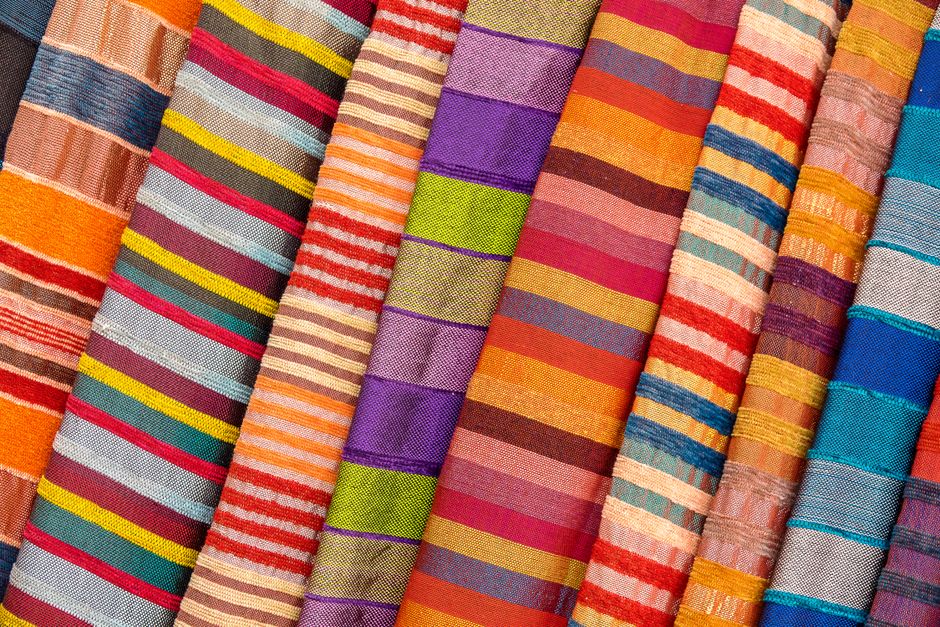
According to the latest fabric trends, the top three fabrics making noise in 2026 are cotton voile, twill, and sateen.
Cotton voile is lightweight and breathable. Perfect for summer wear. Twill is that structured diagonal-weave fabric that works for everything from pants to jackets. Sateen has that subtle sheen that reads expensive without actually being expensive.
If you're building inventory or stocking your studio, these three are safe bets. And if you want designer-inspired patterns on trending bases, 4 way stretch Spandex gives you stretch capability with modern prints that customers are actually buying.
Understanding Fabric Blends
Most modern fabrics aren't 100% one fiber. Blends are where the magic happens.
A cotton-polyester blend gives you the breathability of cotton with the durability and wrinkle resistance of polyester. Rayon blended with nylon adds flow and recovery. Spandex blended with almost anything adds stretch without compromising the fabric's original character.
The trick? Understand what each component brings to the party. If a fabric is 95% cotton and 5% spandex, you're getting mostly cotton with just enough stretch for movement. If it's 50/50, the spandex is doing heavy lifting.
Blends have trade-offs. They might not breathe as well as pure natural fibers, and they might not be quite as strong as pure synthetics. But for most projects, especially dancewear, swimwear, and athletic wear, a thoughtful blend is exactly what you need.
Choosing the Right Fabric for Your Project
Here's the real question: what's your garment supposed to do?
If you're making structured pieces (jackets, pants, structured dresses), reach for canvas, twill, or other non-stretch fabrics. These hold shape and look crisp.
If you're making something that needs to move with the body (dancewear, swimwear, activewear, fitted shirts), you want stretch. Four-way stretch fabrics give you movement in every direction.
If you're going for flow and drape (scarves, flowy dresses, capes), choose lighter, more fluid fabrics like chiffon, voile, or sateen.
If you're prioritizing durability (bags, outerwear, workwear), go heavy. Canvas, twill, and densely-woven polyester all outlast lighter options.
Cost matters too. Natural fibers cost more. Designer-inspired fabrics give you the look at a fraction of the price. And if you're ordering bulk, wholesale pricing helps you maximize profit margins. At Designer Spandex and MORE, every yard is $16.99 with same-day processing, so you're not stuck waiting around when inspiration strikes.
Custom Patterns and Stock Image Integration

Here's something that changes the game: you're not limited to standard fabric patterns.
Designer Spandex and MORE has millions of seamless patterns available through Shutterstock and Adobe. With a 5-yard minimum order, you can get custom prints on spandex base fabrics that no one else has.
Want Shutterstock or Adobe 5 yards Minimum: Your Choice of any Seamless Shutterstock Pattern? You can print literally anything from those libraries onto stretch or non-stretch bases. This is a game-changer for boutique makers and small manufacturers who want differentiation without buying wholesale minimums from big vendors.
Non-Designer Alternatives and Budget-Friendly Options
Designer-inspired fabrics are gorgeous, but they're not your only move. NON designer Inspired Fabric Spandex 4 way stretch gives you solid, versatile bases without the pattern overhead.
These work perfectly for basics, layering pieces, or when you're adding your own embellishments. They're also great for testing out new designs before committing to a premium fabric.
And if you're thinking wholesale? Bulk discounts apply. Contact Designer Spandex and MORE directly to talk volume pricing on whatever fabric type fits your production schedule.
Key Takeaways on Fabric Types
Natural fibers (cotton, linen, wool, silk) breathe well and feel premium but require more care. Synthetic fibers (polyester, nylon, acrylic) are durable and low-maintenance but can feel cheaper. Blends split the difference and often give you the best real-world results.
The 28+ documented fabric types each have a specific job. Canvas for structure. Chiffon for flow. Velvet for luxury. Sateen and twill for modern, trendy pieces.
In 2026, cotton voile, twill, and sateen are leading the charge. Four-way stretch spandex blends dominate dancewear, swimwear, and activewear. And custom patterns from stock libraries are becoming the norm for indie makers.
When you're picking a fabric, always start with function. What does your garment need to do? Then optimize for budget and aesthetic from there.
What's the difference between natural and synthetic fibers?
Natural fibers (cotton, wool, silk, linen) come from plants or animals and tend to be more breathable, softer, and more prone to wrinkling. Synthetic fibers (polyester, nylon, spandex, acrylic) are man-made from petroleum and tend to be more durable, wrinkle-resistant, and affordable. According to the Textile Exchange, natural fibers account for about 25% of global fiber production, while synthetics dominate. Both have real advantages depending on your project needs.
Can I mix different fabric types in one garment?
Absolutely. Fashion entrepreneurs do this all the time. You might use a sturdy canvas for a bag body and pair it with a stretch spandex gusset for flexibility. Or combine a sateen front with a fleece back for contrast. The key is making sure the weights and care requirements are compatible so your finished piece lasts.
What's the best fabric for activewear?
Four-way stretch spandex blends are the industry standard. They move with your body in all directions, wick moisture, and recover to their original shape. Look for blends that are at least 80% performance base fiber (like polyester) with 15-20% spandex for the sweet spot of stretch without losing structure.
How do I know which fabric to choose for my project?
Start by asking: What does my garment need to do? Structured pieces need canvas or twill. Movement pieces need stretch. Flow pieces need light, fluid fabrics like chiffon or voile. Once you know the function, choose your fiber type (natural, synthetic, or blend), then pick your pattern or finish. Budget and timeline help you narrow it down from there.