![Designer inspired f[designer spandex and more] Designer Inspired Fabrics](http://designerspandexandmore.com/cdn/shop/files/Untitled-1_4df5def2-f0b2-4baf-9714-66df1caa11bc_{width}x.png?v=1631713532)
Best Skirt Fabric for Every Style & Budget
by Designer Spandex and MOREYou're ready to make or design a skirt, but you're staring at dozens of fabric options and wondering which one will actually work for your vision. The right skirt fabric can transform a simple pattern into something you'll reach for every week. The wrong choice? You end up with stiff, uncomfortable, or droopy results that never make it out of your closet.
The good news: choosing the right skirt fabric doesn't have to be complicated. Whether you're a fashion entrepreneur, a DIY maker, or a manufacturer looking for bulk yardage, the key is matching the fabric type to what you actually want to wear and how you plan to use it.
In this article
- Stretch vs. Non-Stretch: Which Skirt Fabric Works Best?
- Popular Skirt Fabric Types and What They're Best For
- Designer-Inspired Prints: Stand Out Without the Markup
- Seasonal Considerations: Match Fabric to Climate and Trend
- Bulk and Wholesale Options for Manufacturers and Makers
- How to Choose the Right Skirt Fabric for Your Project
- Where to Source Quality Skirt Fabric Fast
Stretch vs. Non-Stretch: Which Skirt Fabric Works Best?
This is the biggest decision you'll make. Stretch fabrics give you comfort and movement. Non-stretch fabrics give you structure and drape.
If comfort is your priority and you're making everyday skirts, a four-way stretch spandex blend is your foundation. These fabrics move with your body, resist wrinkles, and stay comfortable all day long. Look for options like 4 way stretch Spandex, which gives you durability and wearability at a price that won't break your production budget.
If you want crisp structure and a polished drape, non-stretch woven fabrics are your answer. Canvas and poly-woven options hold their shape beautifully and work great for tailored or midi silhouettes. Designer Spandex and MORE carries Designer Inspired NO STRETCH Woven Polyester Fabric for makers who need that structured look without paying designer prices.
Popular Skirt Fabric Types and What They're Best For
Not all skirt fabrics behave the same way. Understanding the basics helps you avoid costly mistakes.
Cotton blends and natural fibers: Breathable, soft, and comfortable for warm months. Cotton-poly blends give you the best of both worlds: comfort plus durability. Research from the Textile Exchange shows that consumers increasingly prefer natural fiber blends for everyday wear, especially when looking for breathability in summer skirts.
Polyester and performance blends: Wrinkle-resistant, easy to care for, and stretches when blended with spandex. This is why polyester dominates ready-made skirts at retail. Many consumers specifically search for alternatives to pure polyester, which is your opportunity if you're selling custom skirts.
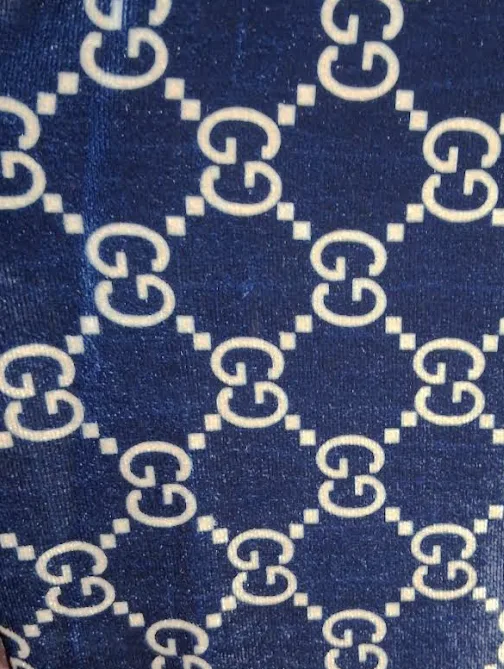
Velvet and specialty fabrics: Perfect for statement pieces and seasonal collections. VELVET 4 Way Stretch Spandex gives you luxury texture without the luxury price tag, and the stretch means your customers actually feel comfortable wearing it.
Denim and heavy-weight options: Structured, durable, and timeless. Perfect for A-line or midi skirts. These fabrics hold their shape wear after wear, making them ideal if you're building a brand around quality.
Designer-Inspired Prints: Stand Out Without the Markup
You don't need to source from official luxury houses to create skirts that look expensive and on-trend. Designer-inspired four-way stretch fabrics give you the aesthetic your customers crave at a wholesale-friendly price point.
Options like the Gucci Designer Inspired Fabrics Tan w/dark lettering 4 way stretch and Versace Spandex 4 way Designer Inspired Fabric let you offer on-trend skirts without on-trend prices. Your cost stays around $16.99 per yard (36 x 60 inches), leaving plenty of margin for retail or wholesale.
Beyond classic logos, you have access to millions of custom patterns. If you want total creative control, Designer Spandex and MORE offers Shutterstock or Adobe 5 yards Minimum: Your Choice of any Seamless Shutterstock Pattern. With a 5-yard minimum, you can test bold prints, seasonal patterns, or niche themes before committing to larger quantities.
Seasonal Considerations: Match Fabric to Climate and Trend

Midi and longer skirt silhouettes are dominating wardrobes heading into 2026. Longer lengths give you room to experiment with fabric weight and texture.
For warm months: Lightweight poly-cotton blends, rayon, and breathable synthetics keep skirts comfortable. Linen-look fabrics feel luxe and handle heat well.
For cooler months: Heavier knits, velvet, and structured wovens work beautifully. The longer midi trend pairs perfectly with textured fabrics that add visual interest.
For transition seasons: Four-way stretch blends adapt across temperature ranges. Your customer can layer or wear alone, and the fabric stays comfortable either way.
Bulk and Wholesale Options for Manufacturers and Makers
If you're building a skirt line, wholesale pricing and bulk discounts directly affect your profit margin. Designer Spandex and MORE specializes in supporting fashion entrepreneurs with per-yard pricing that doesn't require massive minimums.
Every yard of Designer Spandex and MORE stock comes at $16.99 (or less for pre-owned options), with same-day processing and fast USPS shipping. For larger orders or custom pattern bulk runs, reach out directly to discuss volume pricing. You get reliability, speed, and transparency about what you're ordering (designer-inspired, not official).
Non-designer alternatives are also in stock. If you want to move away from luxury branding and focus on unique, original prints or classic solid colors, NON designer Inspired Fabric Spandex 4 way stretch gives you flexibility without sacrificing quality or comfort.
How to Choose the Right Skirt Fabric for Your Project
Start by answering three questions:
Related: Best Tulle Fabric 2026: Top 5 Ranked for Every Project
Related: Best Pink Lace Fabric 2026: Top 5 Ranked
Related: Best Custom Fabric 2026: Top 5 Ranked for Designers
- Who is wearing this skirt? (Yourself, a specific customer demographic, or a broad market?) This shapes whether you prioritize comfort, durability, or look.
- What season and climate? (Light and breathable vs. structured and warm.) This narrows down weight and fiber content.
- What's the skirt style? (A-line, midi, pencil, maxi, pleated?) Certain fabrics hold these shapes better than others.
Once you've answered those, match your answers to fabric type. A-line midi skirts for warm weather? Lightweight poly-cotton or linen blends shine. Tailored pencil skirts for professional wear? Structured non-stretch wovens. Everyday comfort pieces? Four-way stretch is your MVP.
Sample before you commit to bulk. Order a single yard to test pattern, hand feel, and how the fabric behaves when you construct a test garment. This small investment prevents expensive mistakes when you scale up production.
Related: Best Muslin Fabric for Pattern Testing & Quilting
Where to Source Quality Skirt Fabric Fast

You need a supplier who gets that speed and reliability matter. You can't wait weeks for fabric to arrive when you have customers waiting for their orders or samples to show your sales team.
Designer Spandex and MORE processes orders the same day and ships immediately via USPS. Every yard is inspected, and you get the same consistent quality whether you order 1 yard or 100 yards. If you have questions about a specific fabric or need to discuss custom pattern minimums, the team is available and responsive.
What's the difference between four-way stretch and two-way stretch for skirts?
Four-way stretch moves in all directions (up, down, left, right), giving maximum comfort and recovery. Two-way typically stretches only horizontally. For skirts, four-way is better because it prevents sagging at the waistband and moves naturally with walking and sitting. It's worth the small premium.
Can I use designer-inspired prints if I'm selling my skirts commercially?
Yes. Designer-inspired fabrics are legal to use. They're not official designer merchandise, and that's made clear when you sell them. Be transparent with your customers about what they're getting, and you avoid any legal gray area. Many successful indie makers and small manufacturers build entire brands on designer-inspired fabrics at accessible price points.
How much skirt fabric do I need per garment?
Most skirt patterns use 1.5 to 2.5 yards depending on style and size. A-line and flared skirts use more; pencil and fitted skirts use less. Always check your specific pattern, but as a rule of thumb, order at least 2 yards to account for pre-shrinkage and layout mistakes.
Do I need to pre-wash skirt fabric before cutting?
For natural fibers like cotton and linen, pre-washing is smart if shrinkage is a concern. For synthetic blends and spandex mixes, check the care label. Most designer-inspired four-way stretch fabrics are pre-treated and stable. When in doubt, test a small piece first.